About M. Murphy

Great Lake pollution, bird song, chemicals as colonialism, Indigenous environmental data justice, manual suction abortion kits, protocols, pap smears, drosophila in bottles, value-based methods, girls as human capital, queer fish, PCBs, endocrine participating chemicals, phantasmagrams, transecologies …

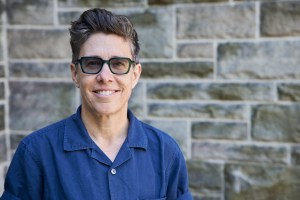
My scholarship focuses on technoscience as it relates to environmental justice, colonialism, data politics, chemical exposures, sexuality, infrastructures, reproduction, and racism. My work contributes to Indigenous and feminist science and technology studies and anti-colonial futures.

I am a Professor in the School of Environment and Women and Gender Studies Institute at the University of Toronto. I hold a tier 1 Canada Research Chair in Science and Technology Studies and Environmental Data Justice and am a Fellow of the Royal Society of Canada.

I co-direct the Technoscience Research Unit (TRU), which hosts the Indigenous Science, Technology, and Environment Research Hub. At the TRU, I co-direct (with Vanessa Gray) the IndigenousEnvironmental Data Justice Lab that undertakes Indigenous-led community-based work in Canada’s Chemical Valley, as well as (with Kristen Bos) the Indigenous Science and Ethical Substance Lab . I am a lead social science PI on a CFREF grant on automated substance discovery, asking how Indigenous STS can remake what ethics look like in chemistry and AI. I am also the Nominated lead PI on the “Transforming Chemical Risk Management with Indigenous Expertise” NFRF Transformation grant. I am a member of the Indigelab Network.

I hold graduate appointments in the History Department, and the Faculty of Information (iSchool) at U of T, and in Science and Technology Studies and the Faculty of Environmental Studies at York University. I have a PhD in the History of Science from Harvard University (1998), and a Bachelors degree in Biology and History and Philosophy of Science and Technology from the University of Toronto (1992).

I am a Red River Métis citizen from Winnipeg. I am Métis from my mother’s side (the Carriere family) and French white settler on my father’s side. I have lived in Tkaronto/Toronto since 2001.

For many years I co-organized the Technoscience Salon, I serve on the Editorial Board of the journal Catalyst: Feminism, Theory, and Technoscience, and was a founding member of the Environmental Data and Governance Initiative, and the Principle Investigator of the Endocrine Disruptors Action Group. I served on the steering committee of the Politics of Evidence Working Group and previously served on the organizing committee of Our Right to Know. From 1996-2007, I was the editor of RaceSci Website on the History of “Race” in Science, Medicine, and Technology.

Contact Information

School of Environment, University of Toronto
33 Willcocks St, Toronto, ON M5S 1C1
email: michelle.murphy@utoronto.ca

Publications

Books

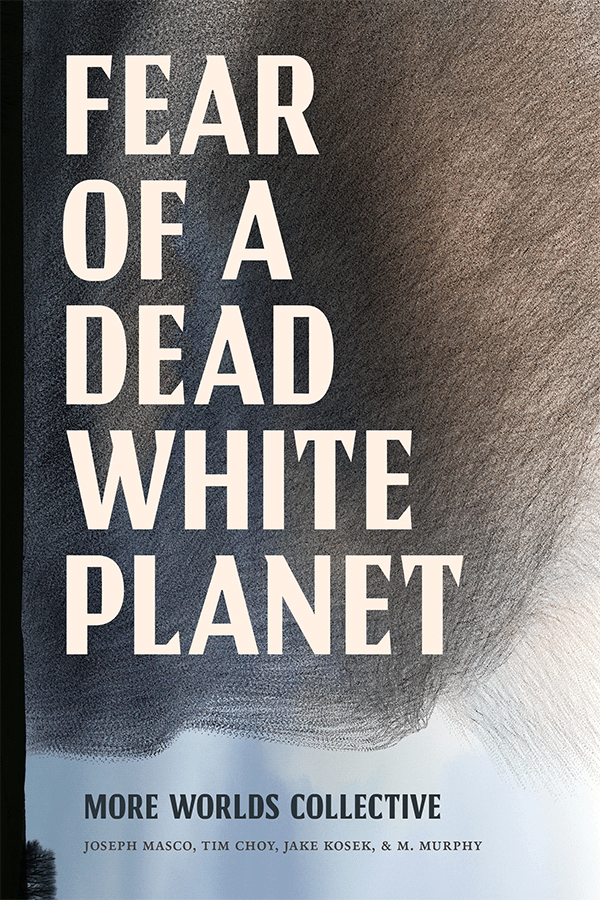
Fear of a Dead White Planet (Duke University Press, 2025) by More Worlds Collective (with Joseph Masco, Tim Choy, and Jake Kosek). This book is open access.

Murphy cover

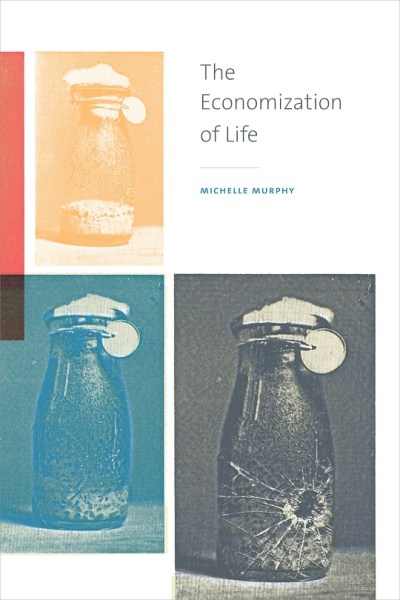
The Economization of Life  (Duke University Press, 2017)

Winner of the Ludwik Fleck Prize (2019) from the Society for Social Studies of Science.

Murphy cover image 5336-2

Seizing the Means of Reproduction: Entanglements of Feminism, Health and Technoscience  (Duke University Press, 2012)

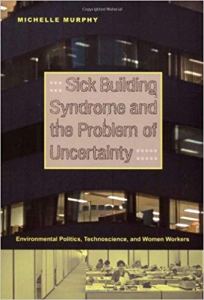
sick building syndrome bigger

Sick Building Syndrome and the Problem of Uncertainty: Environmental Politics, Technoscience, and Women Workers (Duke University Press, 2006)

Winner of the Ludwik Fleck Prize (2008) from the Society for Social Studies of Science.   Blog interview with Jody Roberts about the book on World’s Fair

landscapes1

Landscapes of Exposure: Knowledge and Exposure in Modern Environments 

Osiris v. 19 (University of Chicago Press, 2004) edited with Gregg Mitman and Christopher Sellers. Read the Introduction: “A Cloud over History”

Recent Articles

Published Lectures

Digital Projects

Pollution Reporter App: The Pollution Reporter Mobile App is focused on Ontario’s Chemical valley, where some 40% of Canada’s petrochemicals are processed. Download the latest version in the Apple Store or Google Play. The App focuses on the Imperial Oil Refinery of Sarnia, one of the oldest operating refineries in the world, which is on the traditional Anishinaabe territory, and particularly the land of Aamjiwnaang First Nation.  This App is created by the Environmental Data Justice Lab.

The Land and the Refinery Website: This collaborate project is done with Vanessa Gray, Beze Gray, Kristen Bos, and Reena Shaadan and the TRU’s Environmental Data Justice Lab. It is an Indigenous-led study of one of the world’s oldest refineries. This project is done in service to the Aamjiwnaang community, on whose land this refinery is located. It may also be of interest to educators, the general public and other land protectors.

Podcasts

  • Policy Papers

  • Collective Writing with EDGI

    •  Vera,L, Walker, D., Walker, M. Murphy, M., Mansfield, B., Ogden, J.,  “When Data Justice and Environmental Justice Meet: Formulating a Response to Extractive Logic through Environmental Data Justice” Information, Communication, & Society 22.7 (2019): 1012-1028.
    • Fa-ti Fan, Chia-Ling Kao, Shunling Chen, Michelle Murphy, and Matt Price, and Liz Barry, “Citizens, Politics, and Civic Technology: A Conversation with g0v and EDGI” East Asian Science, Technology and Society 13.2 (2019):1–19. DOI 10.1215/18752160-7542932.
    • Dillon, L., Lave, R., Mansfied, B., Wylie, S., Shapiro, N., Chan, A., and Murphy, M. in press. “Situating Data in a Trumpian Era: The Environmental Data and Governance Initiative.” Annals of the American Association of Geographers 
    • Lindsey Dillon, Vivian Underhill, Nicholas Shapiro, Christopher Sellers, Jennifer Liss Ohayon, Marianne Sullivan, Chris Amoss, Stephen Bocking, Phil Brown, Vanessa De La Rosa, Jill Harrison, Sara Johns, Katherine Kulik, Rebecca Lave, Michelle Murphy, Liza Piper, Lauren Richter, Sara Wylie, the Environmental Data and Governance Initiative “The Environmental Protection Agency in the Early Trump Administration: Prelude to Regulatory Capture” American Journal of Public Health (April, 2018).
    • Leif Fredrickson, Christopher Sellers, Lindsey Dillon, Jennifer Liss Ohayon, Nicholas Shapiro, Marianne Sullivan, Chris Amoss, Stephen Bocking, Phil Brown, Vanessa De La Rosa, Jill Harrison, Sara Johns, Katherine Kulik, Rebecca Lave, Michelle Murphy, Liza Piper, Lauren Richter, Sara Wylie, the Environmental Data and Governance Initiative “History of US Presidential Assaults on Modern Environmental Health Protection.” American Journal of Public Health (April, 2018)
    • Dillon, Lindsey, Dawn Walker, Nicholas Shapiro, Vivian Underhill, Megan Martenyi, Sara Wylie, Rebecca Lave, Michelle Murphy, and Phil Brown. “Environmental Data Justice and the Trump Administration: Reflections from the Environmental Data and Governance InitiativeEnvironmental Justice 10, no. 6 (October 5, 2017): 186–92.

Continue reading “Publications”

Collaborations

Technoscience Research Unit (TRU) 

The TRU  is a home for graduate, postdoctoral, and faculty research in technoscience studies at the University of Toronto with a focus on critical, social justice, environmental and Indigenous approaches to the study of science and technology.  The TRU is located in the School of Environment at the University of Toronto and is home to the Indigenous Environmental Data Justice Lab, the Indigenous Science and Ethical Substance Lab, and the Indigenous Science, Technology, and Education Research Hub. I have been the director of the TRU since its founding in 2007, and am currently co-director with Prof. Kristen Bos.

Indigenous Environmental Data Justice Lab

This Indigenous-led lab focuses on environmental justice in Chemical Valley, which is where 40% of Canada’s petrochemicals are refined, and is on the land of Aamjiwnaang First Nation. It is co-lead by Vanessa Gray (Aamjiwnaang  First Nation), and Beze Gray, and includes other lab members.  Our lab undertakes Indigenous community-based research. Some of our projects include the Pollution Reporter App, policy reports such as Data Colonialism in Chemical Valley, and the Land and Refinery Project.

Indigenous Science and Ethical Substance Lab

With Kristen Bos, I co-lead this lab which focuses on how Indigenous and community-based methods can reshape approaches to pollutants, chemicals, and environmental data.  This lab includes full-time staff researchers, postdoctoral fellows, graduate research fellows, and research assistants.  The lab was first started through my role as lead social science PI in a large Canada First Research Excellent Fund grant on automated substance discovery, associated with the Acceleration Consortium.  The TRU’s Indigenous Science and Ethical Substance Lab has a formal partnership within this CFREF to undertake research that brings Indigenous knowledges to the development of conceptions of “ethical substance” that bring greater consideration of justice in the creation of new chemical substances and the use of AI and automation in chemistry. The lab also undertakes research related to the an NFRF Transformation grant on Indigenous approaches to chemical risk management.  Through this work, we are building strength in the field of Indigenous science and technology studies.

Engineered Worlds/ More  Worlds collective

Bringing together geography, history, Indigenous studies , environmental studies, and science studies, the Engineered Worlds project seeks to re-theorize social science approaches to massive cumulative environmental violence.  The Engineered Worlds project involved three courses, two conferences, and workshop. It was funded by the Neubaurer Collegium  at the University of Chicago and is a collaboration with Joseph Masco, Jake Kosek, and Tim Choy. This project culimated with the  Duke University Press book titled Fear of a Dead White Planet.

Catalyst: Feminism, Theory, Technoscience

I am thrilled to be part of the editorial collective collaborating to make possible this journal, as well as serving as a lead editor from 2017-2019. Catalyst supports the expanding interdisciplinary field of feminist science and technology studies by supporting theoretically inventive and methodologically creative scholarship incorporating approaches from critical public health, disability studies, postcolonial studies, queer theory, sci-art, technology and digital media studies, history and philosophy of science and medicine. The University of Toronto Library hosts the open access OJS platform for Catalyst.

The Technoscience Salon.

Launched in 2008, the Technoscience Salon is an open forum for entangling intellectual and political questions about technoscience while remixing the disciplines composing Science and Technology Studies. Creating a series of public events each year, the Salon aims to create a lively community of thinkers with interests in technoscience studies from around the GTA and beyond. The Salon aspires to prompt political, playful, experimental engagements, as well as new collaborations and conversations.

Past Collaborations

Environmental Data and Governance Initiative (EDGI)

EDGI is a North American network of 175 members from more than 30 different academic institutions and 10 non-profit or grassroots organizations, as well as caring and committed volunteers who come from a broad spectrum of work and life backgrounds. We work in collaboration with other organizations and communities concerned about climate change, science policy, good governance, and environmental and data justice with a focus on the United States. EDGI analyzes federal environmental data, websites, institutions, and policy, as well as seeks to improve environmental data stewardship and to promote environmental health and environmental justice. EDGI has four major program areas: ONE: archiving  vulnerable environmental data, TWO: monitoring changes to information about the environment, energy, and climate on federal websites, THREE: interviewing federal employees about threats and changes to environmental health agencies, and FOUR: imagining, conceptualizing, and moving toward Environmental Data Justice. Our work in these areas has yielded three major reports, numerous website monitoring reportsacademic articlespublic comments on regulations, op-ed and analysis pieces written for the public, and extensive coverage  in the news. EDGI is viewed as the preeminent watchdog group for material on federal environmental data issues on government websites. Our work is widely acknowledged, including hundreds of mentions in leading national and international media such as the New York Times, Washington Post, and CNN. For more about our accomplishments, read our Annual Report.  I am a founding member of EDGI, served on the steering committee from 2016-2018, organized the first EDGI data archiving event, and lead the Environmental Data Justice Working Group.

Endocrine Disruptors Action Group

Endocrine Disruptors Action is a working group of researchers concerned with the widespread presence of endocrine disrupting chemicals in commodities, built environments, industrial emissions, ecosystems, waters, and atmospheres.  EDAction advocates for improvements to Canadian toxics governance and seeks to advance critical discussions about the regulation, science, and monitoring of endocrine disrupting chemicals. The work of EDAction is funded by  the Alterlife SSHRC Insight Grant.

Select Other Past Collaborations:

Current Book in Progress

Alterlife in the Ongoing Aftermaths of Chemical Exposure

Global biomonitoring studies have found industrially produced chemicals in the blood and breast milk of every living person tested, suggesting that all humans, and perhaps most life forms, have been materially altered by the absorption of such human-invented chemicals released over the last century.  Emerging research in environmental epigenetics and related scientific fields have traced how the effects of such chemical exposures can produce effects that persist across generations in the health of future children, grandchildren, great grandchildren, and beyond.  This research project concerns the status of  living in a historic moment when life on earth unevenly shares condition of already having been altered by human-made chemicals, a condition that might be called alterlife.  Alterlife names a historically new form of life that is altered by the chemical violence of capitalism and colonialism.

The Alterlife in the Ongoing Aftermaths project works towards decolonial approaches to understanding chemical exposures in the lower Great Lakes, which is Anishinaabe and Haudenoshaunee land.

The project is organized around four concerns. First, creating non-damage based accounts of chemical violence while still attending to the ways chemicals are part of the infrastructures of settler colonialism, racism, and capitalism that concentrate and distribute destructions and benefits. Second, finding critical and creative ways of using environmental data to hold governments and petrochemical companies responsibile for environmental violence.  Third, expanding our understanding of industrial chemicals, and especially endocrine disrupting chemicals, to view them as structures, not molecules, that extend in time and disrupt land/body relations. This includes attending to the intergenerational and looping temporalities between many pasts and possible futures as a way to rethink the politics of chemicals. And fourth, the condition of alterlife invites us to attend to the possibility of alternative life forms, of life otherwise, and of future survival.  Contemporary environmental politics is replete with apocalyptic anxieties, and descriptions of doomed and damaged communities.  The Great Lakes region is rich with counter-histories and alter-futures within theories, art, and practices. This project develops the notion of alterlife in engagement with Indigenous futurities and  against doomsday temporalities and colonial timescapes. It strives to foster approaches that amplify decolonial, reparative, and feminist potentials about a future of resurgence.

This research is SSHRC funded.

Listen to “Alterlife in the Aftermath” in Panel 1 at the Engineered Worlds conference at the University of Chicago (October 2015) organized by Joseph Masco. 

Recent Online Talks

“Lessons from Birdsong: Land/Body Desires in the Aftermath” Sonic Acts, Amsterdam, 2024.

“Bird-Song and Place-thought in the Aftermath,” Disrupting Disruptions: the Feminist and Accessible Publishing and Communications Technologies Speaker and Workshop Series, Concordia/McGill, 2024.

“What if what you know about lands and bodies is wrong?” New Horizons Talk, Department of Family and Community Medicine, University of Toronto, 2023.

“With and Against Technoscience in the Aftermath” inaugural Feminist/Intersectional Science and Technology Studies Conference (F/ISTS), Barnard College 2023


“Core Readings – Crawford Lake” with Francine McCarthy, Unearthing the Present Anthropocene Workshop, Haus der Kulturen der Welt, Berlin, 2022.

“Pollution, Colonialism, and Re-imagining Chemicals” Keynote at AusSTS Conference, 2021.

“Plastic Pollution, Toxicity, and Policy Change” Panel Discussion with anessa Gray, Mark Fisher, Michelle Murphy and Chelsea Rochman. Moderated by Heather Davis for Plastic Heart: Surface All the Way Through on view at the Art Museum at the University of Toronto, 2021

“Chemical Violence and Decolonial Futures” UW-Madison Center for the Humanities Humanities Without Boundaries Lecture. March 27, 2019.